
#ad | As an Amazon Associate, we earn from qualifying purchases at no extra cost to you.
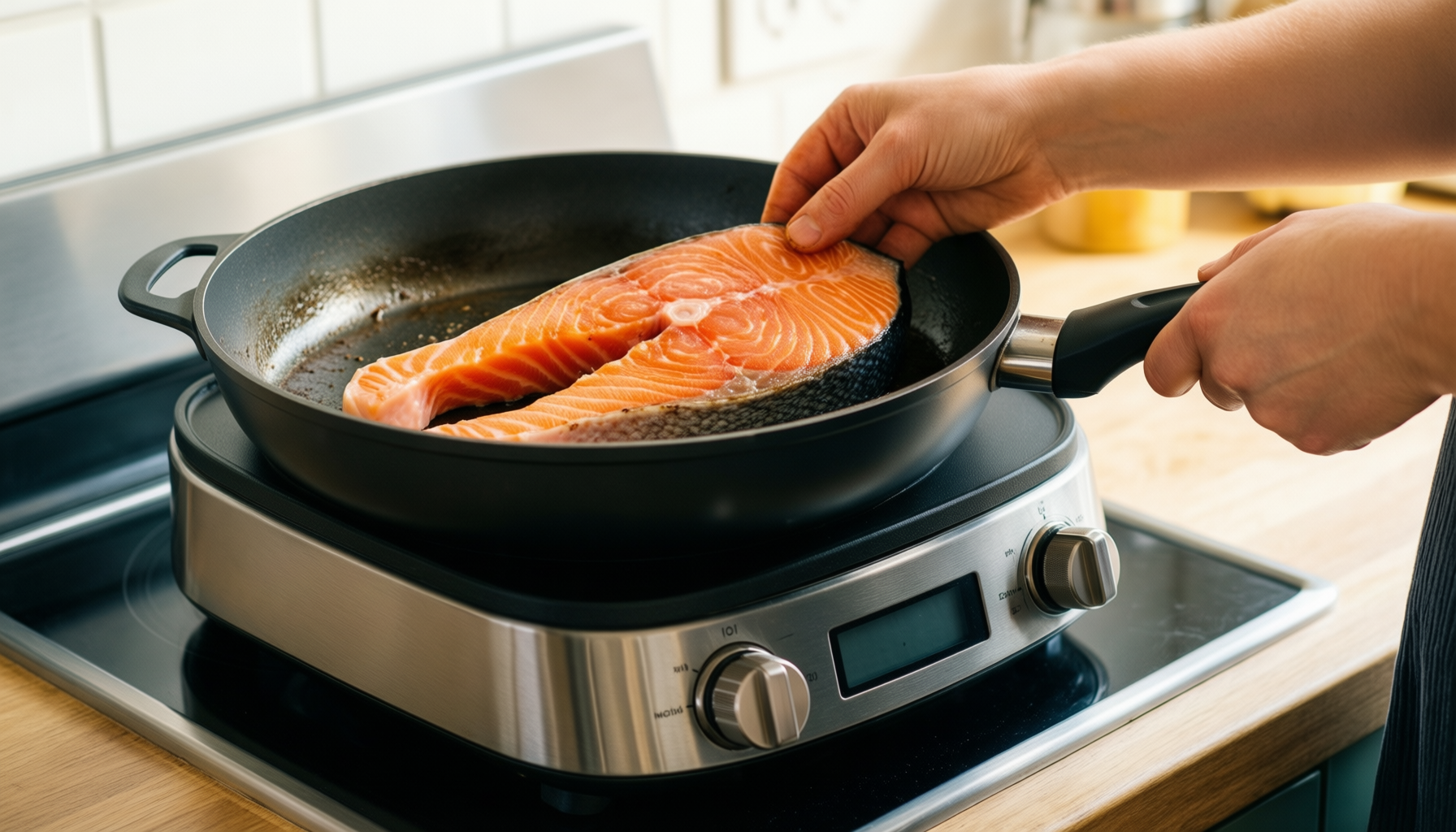
This Misen Carbon Nonstick Skillet addresses the specific frustration of home cooks who need high-heat searing power without the health concerns associated with traditional PTFE coatings. The standout feature is its nitrided carbon steel construction, which eliminates the need for a fragile chemical layer while maintaining a slick surface for easy food release. However, a significant limitation exists for those in hard water regions or those who strictly prefer low-heat cooking, as the surface requires immediate drying to prevent spotting and demands proper preheating for delicate items. This model is best for UK home chefs who want to retire their flaking Teflon pans and seek a durable, induction-compatible tool capable of withstanding open flames and high oven temperatures.
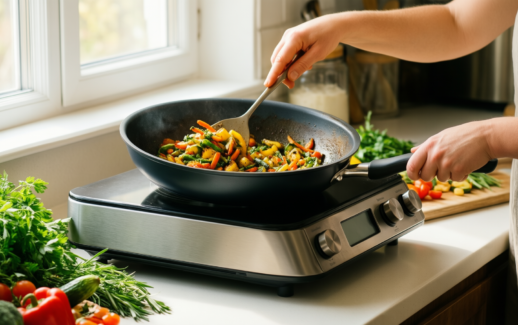
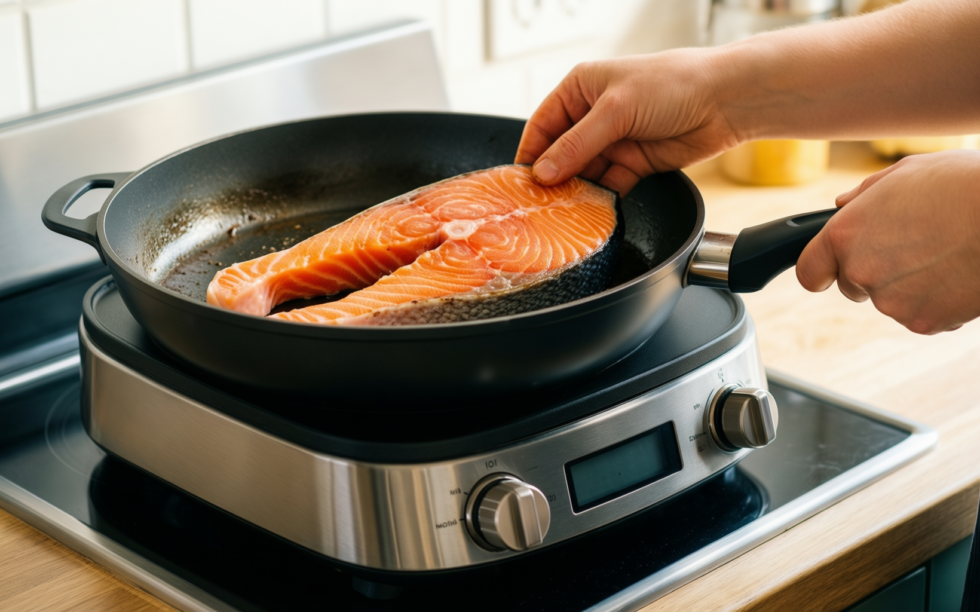
The primary appeal of this misen carbon nonstick skillet review centers on its ability to handle extreme temperatures that standard coated pans cannot survive. The product description states the pan is rated for 1100°F, a temperature far exceeding the 500°F limit of typical nonstick cookware. For UK cooks using induction hobs, which often struggle with maintaining consistent high heat due to their rapid on/off cycling, this thermal tolerance is critical. It allows for the Maillard reaction to occur properly on thick-cut steaks without the risk of degrading a synthetic coating. Unlike standard PTFE pans that release toxic fumes when overheated, this carbon steel surface remains stable, offering a safer environment for high-heat searing.
🛒 Check Price on Amazon →✓ See today's price & reviews
The engineering behind this heat management involves an integrated aluminum core, a specification that directly impacts performance on induction surfaces. Traditional carbon steel pans are notorious for developing hot spots, which can burn food in one area while leaving other areas undercooked. The aluminum core in this model eliminates that issue by distributing heat evenly across the base. This means that when you place a steak on the pan, the entire surface responds to the heat source uniformly. For users who have previously struggled with induction hobs failing to reach the necessary temperature for a good sear, this design offers a practical solution that bridges the gap between professional kitchen performance and home appliance limitations.
Searing Steaks on a UK Induction Hob Without Burning the Coating
A common barrier to adopting carbon steel cookware is the fear of maintenance, specifically the need for seasoning. This product addresses that concern by featuring a factory-applied nonstick finish that eliminates the initial learning curve. You do not need to spend hours baking oil into the pan before first use. The surface is designed to be ready for immediate cooking, providing the easy-release benefits of a nonstick pan from day one. As you use it, the pan builds a natural patina that improves over time, creating a surface that becomes increasingly slick with each use. This dual approach—factory-ready convenience followed by natural improvement—makes it a viable alternative for those who find traditional carbon steel intimidating.
The Role of Nitrided Carbon Steel in Heat Retention
The specific material choice of hardened, nitrided carbon steel is not just a marketing term; it dictates how the pan interacts with heat sources. Nitriding is a process that hardens the surface, making it more resistant to wear and tear than standard carbon steel. This hardness is crucial for a pan that is rated to withstand metal utensils. Because the surface is harder, it does not scratch or flake in the same way a softer coating might. This material property ensures that the pan maintains its structural integrity even when subjected to the abrasive forces of metal spatulas or whisks, which is a significant advantage over softer nonstick alternatives.
Induction Compatibility and Base Design
While the pan is compatible with induction, gas, and electric stoves, the interaction with induction hobs requires attention to the base diameter and weight. The product description confirms it is induction-safe, but users must ensure their specific induction model supports the pan’s weight and base size. Induction hobs work by creating a magnetic field that heats the cookware directly. If the pan is too light or the base is not flat enough, the hob may not recognize it, leading to inefficient heating. The integrated aluminum core adds weight and stability, which helps in this regard, but it is still essential to check your hob’s specifications to ensure compatibility with the 12-inch size of this model.
Why This Pan Fails for Delicate Eggs and Hard Water Regions
Despite its high-heat capabilities, this pan has specific limitations when it comes to low-heat cooking tasks. The carbon steel surface, while nonstick, is not as forgiving as a PTFE coating when it comes to delicate items like scrambled eggs or omelets. If the pan is not preheated correctly, the eggs can stick to the surface. This is a common issue with uncoated pans and requires a level of attention that coated pans do not. For cooks who rely on a pan for quick, low-heat breakfast items without the need for precise temperature control, this model may present a challenge. The ease of release is present, but it is conditional on proper technique, unlike the unconditional release of a traditional nonstick pan.
The issue of water spots is another critical consideration, particularly for UK residents in hard water areas. The nitrided finish requires immediate drying after washing to prevent spotting. If you leave the pan to air dry in a hard water region, you will likely see mineral deposits on the surface. These spots are not just cosmetic; they can affect the nonstick performance over time. Coated pans are generally more forgiving of water marks because the coating is non-porous. With this carbon steel pan, the surface is more reactive to moisture, meaning that the care routine must be strict. If you are not willing to dry the pan immediately after washing, this model may not be the right fit for your kitchen routine.
Furthermore, while the pan is induction-safe, it is not magnetic in the same way as cast iron. This distinction is important for users who have older or less sensitive induction hobs. The pan’s base is designed to work with induction, but it does not have the same magnetic pull as a cast iron skillet. This means that if your induction hob has a minimum weight or diameter requirement, you must verify that this 12-inch pan meets those criteria. The aluminum core helps with heat distribution, but it does not change the magnetic properties of the carbon steel. For users with high-end induction hobs that can detect lighter cookware, this is not an issue, but for those with older models, it is a potential compatibility concern.
Preheating Techniques for Delicate Foods
To achieve the best results with delicate foods, the preheating technique is crucial. The pan should be heated over medium heat until a drop of water dances across the surface. This indicates that the pan is at the right temperature to prevent sticking. If you skip this step or heat the pan too quickly, the proteins in the eggs can bond to the metal surface, making them difficult to release. This is a skill that takes practice, and it is a significant difference from using a PTFE pan, where you can simply place the eggs on the pan and cook them without worrying about the surface temperature. For those who want a zero-effort breakfast pan, this model requires a bit more attention.
Managing Hard Water and Drying
In hard water regions, the drying process is non-negotiable. After washing the pan, it should be dried immediately with a towel. Allowing it to air dry will result in water spots that can be difficult to remove. These spots can also interfere with the natural patina that forms on the pan. To maintain the nonstick performance, it is important to keep the surface dry and free of mineral deposits. This is a simple task, but it requires a change in habit for those who are used to leaving coated pans to air dry. If you are not willing to make this adjustment, you may find that the pan does not perform as well as expected over time.
Where the Design Falls Short
While the Misen Carbon Nonstick Skillet offers many advantages, there are specific areas where the design falls short for certain users. The primary limitation is the need for careful drying, as mentioned earlier. This is a trade-off for the durability and high-heat capability of the pan. Coated pans are more forgiving in this regard, but they come with their own set of limitations, such as a lower heat tolerance and the risk of flaking. This model eliminates the flaking risk but introduces the need for immediate drying. For users who have a busy kitchen and do not have the time to dry the pan immediately, this can be a significant drawback.
Another area where the design falls short is the initial learning curve for seasoning. While the pan comes with a factory-applied nonstick finish, it still requires some maintenance to maintain its performance over time. Unlike a PTFE pan, which does not require any maintenance other than washing, this carbon steel pan needs to be kept dry and occasionally oiled to maintain its patina. This is not a difficult task, but it is an additional step that some users may find inconvenient. The pan is designed to last for years, but it requires a level of care that coated pans do not.
The size of the pan is also a consideration. At 12 inches, it is a large pan that may not fit in all kitchen cabinets or on all stovetops. For users with smaller kitchens or stovetops, this size may be too large. The 12-inch size is ideal for cooking for a family or for cooking large portions, but it may be overkill for those who cook for one or two people. The size is a specification that users should consider before purchasing, as it can affect the usability of the pan in their specific kitchen setup.
The Challenge of Metal Utensils
While the pan is metal-utensil safe, this does not mean that you can use any metal utensil without care. The surface is hard, but it is not indestructible. Using a sharp metal utensil with excessive force can still scratch the surface. This is a minor issue, but it is worth noting. The pan is designed to withstand the use of metal spatulas and whisks, but it is not impervious to damage. Users should be mindful of how they use their utensils to ensure the longevity of the pan. This is a small trade-off for the durability of the carbon steel surface.
Storage and Space Considerations
The 12-inch size of the pan also has implications for storage. It is a large pan that requires significant space in a kitchen cabinet or on a shelf. For users with limited storage space, this can be a problem. The pan is not stackable in the same way as some other cookware, which means it requires dedicated space. This is a consideration for users who have a small kitchen or limited storage options. The size is a feature for those who need a large pan, but it is a limitation for those who do not.
Who Should Skip This
This misen carbon nonstick skillet review is not for everyone. If you are a cook who primarily prepares low-heat, delicate foods and does not want to deal with the maintenance of a carbon steel pan, this model is not for you. The need for preheating and immediate drying is a significant barrier for those who want a zero-effort pan. If you are in a hard water region and do not want to deal with water spots, this pan is also not a good fit. The maintenance required to keep the pan in good condition is a significant consideration for those who have a busy lifestyle.
Another group that should skip this pan is those who have older induction hobs that may not be compatible with the pan’s weight and base diameter. If your induction hob has strict requirements for cookware, you need to verify that this pan meets those requirements before purchasing. The pan is induction-safe, but it is not guaranteed to work with all induction hobs. For users with older or less sensitive hobs, this can be a deal-breaker. It is important to check your hob’s specifications to ensure compatibility.
Finally, if you are looking for a pan that is completely maintenance-free, this model is not for you. While it is more durable than a PTFE pan, it still requires some care to maintain its performance. The need for drying and occasional oiling is a trade-off for the durability and high-heat capability of the pan. For those who want a pan that requires no maintenance, a PTFE pan may be a better option, despite its shorter lifespan. This model is for those who are willing to put in the effort to maintain a high-quality pan that will last for years.
How It Compares in Its Category
When comparing this pan to traditional Teflon pans, the longevity is the primary advantage. Teflon pans typically last for one to two years before the coating starts to flake. This carbon steel pan, with proper care, can last for many years. The durability is a significant advantage for users who cook high-heat meals frequently. The pan is designed to withstand the rigors of high-heat cooking, which is a task that Teflon pans cannot handle. The trade-off is that Teflon pans offer easier cleanup for all foods, while this pan requires more attention to drying and storage.
For UK cooks who want to retire their Teflon collection due to health concerns or heat limits, this pan serves as a direct professional-grade replacement. It offers the high-heat tolerance and durability of a professional pan without the seasoning curve. The factory-applied nonstick finish makes it easy to use from the start, and the natural patina that forms over time improves the performance of the pan. This makes it a viable alternative for those who are looking for a healthier, more durable option. The pan is a significant upgrade from Teflon pans in terms of durability and heat tolerance, but it requires a bit more care to maintain.
The comparison to cast iron is also relevant. This pan heats five times faster than cast iron, which is a significant advantage for users who want quick cooking. The integrated aluminum core eliminates the hot spots that are common in cast iron pans, providing more even heating. This makes it a better option for users who want the benefits of cast iron without the slow heating and uneven heat distribution. The pan is also lighter than cast iron, which makes it easier to handle. This is a significant advantage for users who have difficulty handling heavy cookware.
Durability vs. Convenience
The durability of this pan is its primary advantage over Teflon pans. It is designed to last for years, while Teflon pans typically last for one to two years. This makes it a more sustainable option for users who want to reduce waste. The convenience of Teflon pans, however, is a significant advantage for those who want a zero-effort pan. The trade-off is that this pan requires more care to maintain its performance. For users who are willing to put in the effort, the durability is a significant advantage. For those who want convenience, Teflon pans may be a better option.
Heat Tolerance and Performance
The heat tolerance of this pan is a significant advantage over Teflon pans. It is rated for 1100°F, which is far higher than the 500°F limit of Teflon pans. This makes it a better option for high-heat cooking, such as searing steaks or making stir-fries. The Teflon pan will degrade at these temperatures, while this pan will remain stable. This makes it a safer option for high-heat cooking. The performance of the pan is also superior in terms of heat distribution, thanks to the integrated aluminum core. This makes it a better option for users who want even heating and quick cooking.
Final Verdict
The Misen Carbon Nonstick Skillet is a well-engineered tool that solves the specific problem of high-heat cooking without the health risks of PTFE coatings. Its nitrided carbon steel construction and integrated aluminum core provide excellent heat distribution and durability, making it a strong choice for UK home chefs who want to retire their flaking Teflon pans. However, it is not a perfect fit for everyone. The need for immediate drying in hard water regions and the requirement for proper preheating for delicate foods are significant limitations that must be considered. If you are willing to put in the effort to maintain the pan and you need a high-heat capable tool, this model is a worthwhile investment. It offers a professional-grade performance that is accessible to home cooks, with the added benefit of a factory-applied nonstick finish that eliminates the initial learning curve. For those who prioritize durability and high-heat capability over zero-effort convenience, this is a strong choice.
🛒 Check Price on Amazon →✓ See today's price & reviews