
#ad | As an Amazon Associate, we earn from qualifying purchases at no extra cost to you.
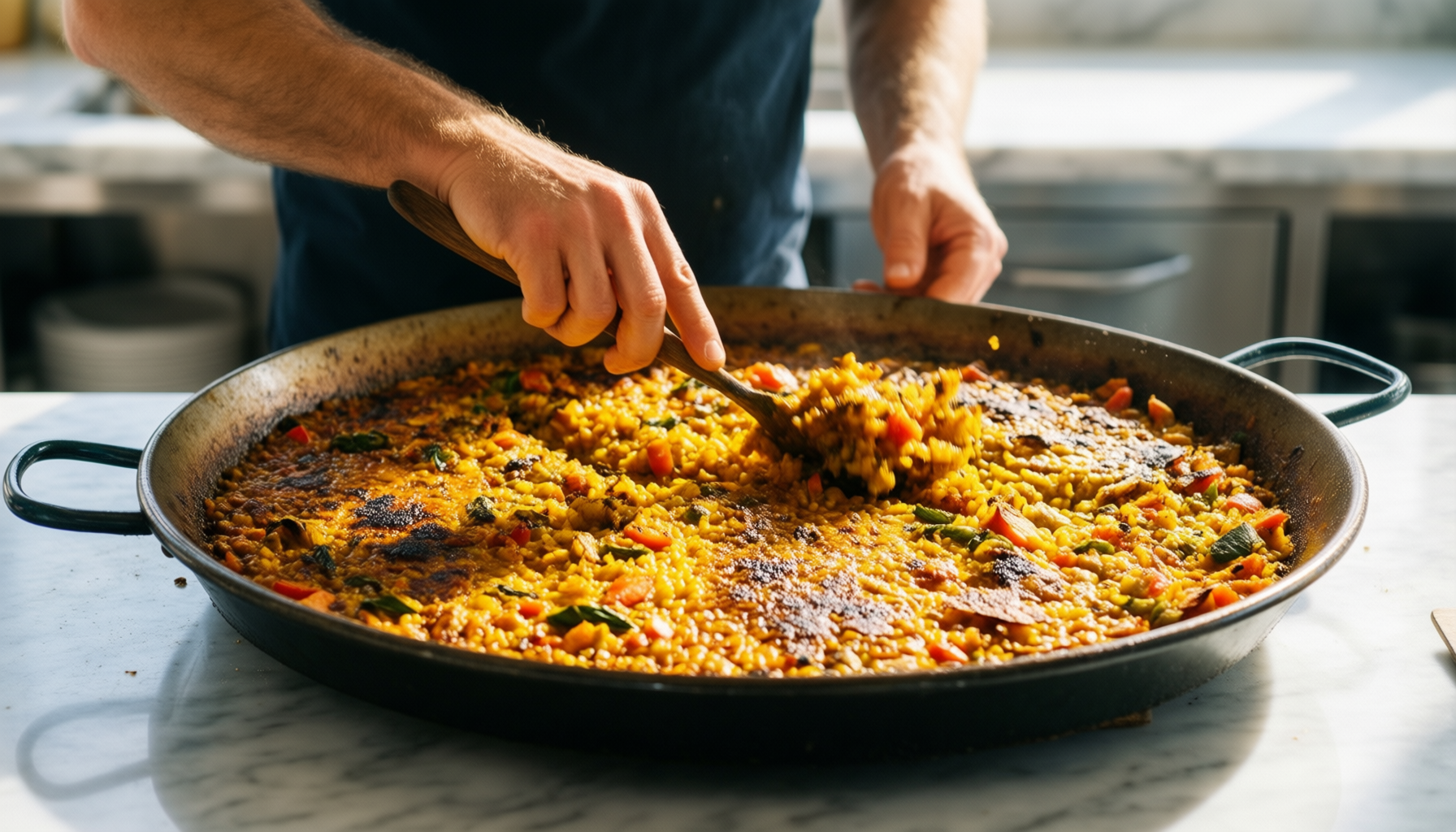
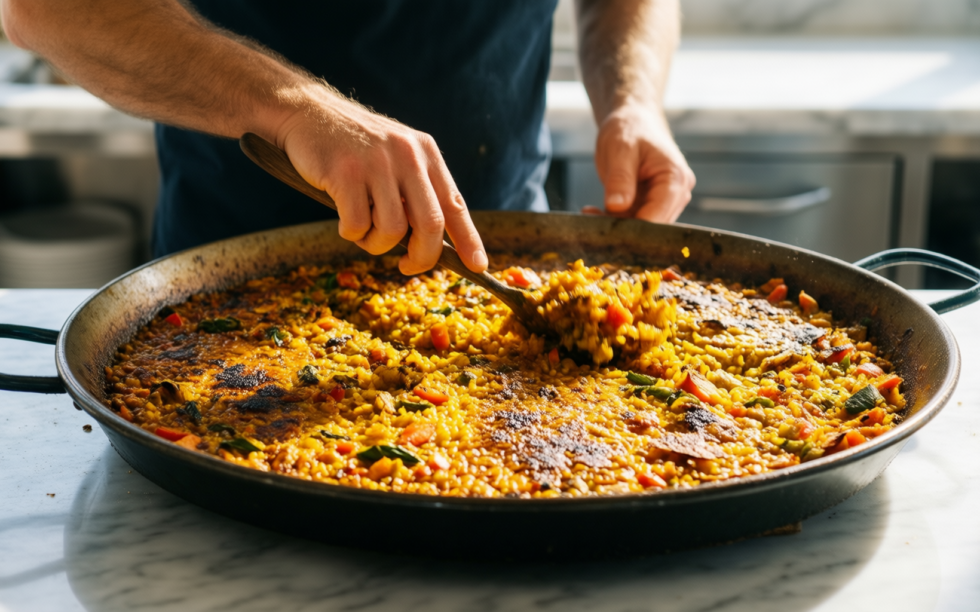
The 40cm diameter of this specific model addresses a clear logistical gap for households that regularly host groups of seven to eight people, eliminating the need to cook multiple smaller batches. The standout feature here is the German GREBLON chemical-free ceramic coating, which promises a non-stick surface that is significantly easier to clean than traditional seasoned steel. However, the heavy-duty carbon steel construction combined with the large surface area creates a substantial weight that may be challenging for users with limited wrist strength. This pan is best for UK home cooks who prioritize induction compatibility and easy cleanup over the traditional high-heat searing capabilities of bare carbon steel.
Feeding a Crowd: Why the 40cm Diameter Changes Family Dinner Logistics
The primary advantage of this specific model is its capacity to serve seven to eight people in a single vessel, a feat that standard 32cm pans simply cannot achieve without overcrowding. When cooking rice-based dishes like paella or risotto, overcrowding leads to uneven absorption and a gummy texture, so the 40cm surface area allows for a proper single-layer spread of ingredients. This means the heat penetrates the entire dish uniformly, ensuring that the rice at the edges cooks at the same rate as the center, which is critical for the texture expected in a professional-style dish.
🛒 Check Price on Amazon →✓ See today's price & reviews
For UK households using induction hobs, the size of the pan relative to the heating zone is a practical consideration. While the pan is large, most standard UK induction zones are designed for smaller cookware, meaning the outer edges of the 40cm surface may not receive direct heat from a single burner. This requires a cooking technique that involves rotating the pan or using a larger dual-zone burner if available, but the benefit is that you are not limited to the small cooking area of a standard frying pan. The ability to cook a full family meal in one go reduces the number of pots and pans needed in the sink, streamlining the entire dinner preparation process.
The design also supports multi-purpose cooking beyond just paella, allowing users to prepare stir-fries, breakfasts, or even bake pizzas in the oven. This versatility means that the large surface area is not wasted when you are not making a large rice dish; it can be used for cooking a large batch of pancakes or a family-sized stir-fry. The non-stick nature of the coating ensures that these varied ingredients release easily from the surface, preventing the sticking issues that often occur when cooking delicate items like fish or eggs in a large, well-used pan.
Managing Heat Distribution in Large Vessels
One specific challenge with a 40cm pan is the distance between the heat source and the outer rim. In this model, the heavy-duty carbon steel body helps to distribute heat more evenly across the surface, but users should expect that the center will heat up faster than the edges on a standard induction hob. To mitigate this, it is advisable to start with a lower heat setting and allow the pan to warm up gradually, rather than cranking the heat to maximum immediately. This approach helps to prevent the rice from burning at the center while the edges remain undercooked, a common issue with large-diameter cookware.
The Practical Difference from Smaller Pans
Unlike a standard 28cm or 32cm pan, which requires multiple cooking cycles to feed a group, this 40cm model allows for a single, continuous cooking process. This reduces the total time spent at the stove and minimizes the risk of the food cooling down between batches. For hosts who are managing multiple dishes, having one large vessel for the main course simplifies the workflow and ensures that the food is served hot and fresh. The large capacity also means that you can add more ingredients, such as vegetables or seafood, without compromising the quality of the dish.
Induction Compatibility: How the Heavy-Duty Base Handles UK Electric Hobs
The compatibility of this pan with induction hobs is a key selling point, as many traditional paella pans are not designed for this type of heat source. The stainless steel base is specifically engineered to be magnetic, ensuring efficient energy transfer from the induction coil to the pan. This design feature means that the pan heats up quickly and evenly, which is essential for cooking rice dishes that require precise temperature control. The heavy-duty construction also helps to maintain a stable temperature, reducing the fluctuations that can occur with lighter, thinner cookware.
The use of a stainless steel base rather than a fully carbon steel bottom is a deliberate choice to ensure induction compatibility. While carbon steel is excellent for heat retention, it is not always magnetic enough for efficient induction cooking. By incorporating a stainless steel base, the manufacturer has ensured that the pan works on all types of hobs, including gas, electric, ceramic, and induction. This versatility makes it a practical choice for UK households that may have mixed hob types or are planning to upgrade their kitchen appliances in the future.
The non-stick coating is another factor that influences how the pan performs on induction hobs. Unlike traditional seasoned steel, which requires careful maintenance to prevent rust and sticking, the GREBLON coating provides a consistent non-stick surface that is easy to clean. This means that after cooking a messy dish like paella, the pan can be washed in the dishwasher without the risk of damaging a delicate seasoning layer. The ease of maintenance is a significant advantage for busy home cooks who want to enjoy the benefits of high-performance cookware without the hassle of constant upkeep.
Magnetic Base Efficiency
The thickness and material of the base play a crucial role in induction efficiency. A thicker, magnetic base ensures that the pan couples effectively with the induction field, leading to faster heat-up times and better energy efficiency. In this model, the stainless steel base is designed to maximize this coupling, ensuring that the pan heats up quickly and evenly. This is particularly important for cooking rice, which requires a steady, consistent heat to cook properly. The efficient heat transfer also means that the pan cools down slowly, allowing for better control over the cooking process.
Addressing Coating Myths
There is a common myth that non-stick coatings are not suitable for induction hobs due to the high temperatures involved. However, the GREBLON coating used in this pan is designed to withstand the temperatures required for induction cooking. The coating is chemical-free and durable, ensuring that it does not degrade or peel off under normal use. This makes it a safe and reliable choice for induction cooking, providing the benefits of a non-stick surface without the concerns associated with cheaper, less durable coatings.
Who Should Skip This Pan: Limitations for Traditional Paella Purists
While this pan is a versatile and convenient tool for many home cooks, it is not suitable for everyone. Traditional paella purists who insist on using bare carbon steel may find the non-stick coating limiting for achieving the high-heat ‘socarrat’ or burnt bottom that is characteristic of authentic paella. The non-stick surface prevents the rice from sticking to the pan, which is desirable for easy cleanup but can inhibit the formation of the crispy, caramelized layer that purists seek. If you are looking for a pan that can withstand extreme heat and develop a natural patina, this model may not be the right choice.
The weight of the pan is another consideration that may deter some users. The heavy-duty carbon steel construction makes the pan durable and effective for heat distribution, but it also makes it significantly heavier than lighter, non-stick alternatives. For users with limited wrist strength or mobility issues, lifting and carrying a 40cm pan filled with food can be challenging. The handles are designed to be sturdy, but the overall weight of the pan, especially when full, requires a certain level of physical strength to manage comfortably. If you have any physical limitations, you may want to consider a smaller or lighter alternative.
Additionally, the non-stick coating is not compatible with open flame or outdoor campfire cooking. The high, direct heat of an open flame can damage the coating, causing it to peel or degrade. If you are a frequent outdoor cook who uses a campfire or a portable gas burner for cooking, this pan is not suitable for that purpose. The coating is designed for use on standard kitchen hobs, and exposing it to open flames will void any warranty and reduce the lifespan of the pan. For outdoor cooking, a traditional carbon steel pan without a non-stick coating would be a better choice.
High-Heat Cooking Limitations
The non-stick coating has a maximum temperature limit, which is lower than that of bare carbon steel. This means that you cannot use this pan for high-heat searing or frying at temperatures that would be safe for a seasoned steel pan. If you are used to cooking with a carbon steel pan at high heat, you will need to adjust your cooking techniques to avoid damaging the coating. This limitation is a trade-off for the ease of cleanup and the non-stick performance, but it is an important factor to consider if you plan to use the pan for a variety of high-heat cooking methods.
Physical Handling Challenges
The size and weight of the pan require a certain level of physical strength to handle. The 40cm diameter makes it a large pan, and the heavy-duty construction adds to the overall weight. For users with limited mobility or strength, this can be a significant drawback. The handles are designed to be sturdy, but they do not reduce the weight of the pan. If you have any physical limitations, you may find it difficult to lift and carry the pan, especially when it is full of food. In this case, a smaller or lighter pan may be a more practical choice.
Non-Stick vs. Carbon Steel: A Practical Look at Maintenance and Durability
The choice between a non-stick pan and a traditional carbon steel pan often comes down to maintenance and durability. The GREBLON coating in this model offers a significant advantage in terms of ease of cleaning, as food does not stick to the surface. This means that after cooking a messy dish like paella, the pan can be washed in the dishwasher without the need for scrubbing or seasoning. This is a major benefit for busy home cooks who want to spend less time on cleanup and more time enjoying their meals.
However, the durability of the non-stick coating is a concern for some users. While the GREBLON coating is designed to be scratch-resistant and durable, it is not indestructible. Over time, the coating can wear down, especially if metal utensils are used. To maximize the lifespan of the pan, it is recommended to use wooden or silicone utensils and to avoid abrasive cleaners. In contrast, a traditional carbon steel pan develops a natural patina over time, which becomes more non-stick with use. This patina is durable and can last for decades if properly maintained, but it requires regular seasoning and careful cleaning to prevent rust.
The impact of metal utensils on the non-stick surface is a key consideration. Unlike carbon steel, which can handle metal utensils without issue, the non-stick coating in this pan is susceptible to scratching. Using metal utensils can damage the coating, leading to sticking and reduced performance. To avoid this, it is important to use the right tools when cooking with this pan. This is a simple adjustment that can make a significant difference in the longevity of the pan.
Cleaning Effort Comparison
The ease of cleaning is one of the main advantages of the non-stick coating. Unlike carbon steel, which requires careful drying and oiling to prevent rust, the non-stick pan can be washed in the dishwasher and left to dry. This makes it a much more convenient option for daily use, especially for those who do not have the time or inclination to maintain a seasoned pan. The dishwasher-safe feature also ensures that the pan is thoroughly cleaned, reducing the risk of bacteria or food residue.
Long-Term Durability Factors
The long-term durability of the pan depends on how it is used and maintained. The heavy-duty carbon steel body provides a solid foundation, but the non-stick coating is the component that is most susceptible to wear. By using the right utensils and avoiding high heat, you can extend the life of the coating. The stainless steel base is also durable and resistant to rust, ensuring that the pan remains in good condition for years to come. With proper care, this pan can be a reliable tool in your kitchen for a long time.
Maximizing the 40cm Surface: Cooking Techniques for Even Heat
To get the most out of this large pan, it is important to use the right cooking techniques to ensure even heat distribution. One effective method is to preheat the pan on a medium heat setting before adding the ingredients. This allows the entire surface to reach a consistent temperature, which is essential for cooking rice evenly. Avoiding high heat at the start helps to prevent the center of the pan from overheating while the edges remain cool.
Another technique is to rotate the pan periodically during cooking. This helps to ensure that the heat is distributed evenly across the entire surface, especially if you are using a standard induction hob with a smaller heating zone. By rotating the pan, you can ensure that all parts of the rice are exposed to the heat, leading to a more uniform cook. This technique is particularly useful for large batches of rice, where the center and edges can cook at different rates.
Managing the liquid absorption rate is also important when cooking in a large pan. In a 40cm pan, the surface area is larger, which means that the liquid can evaporate faster than in a smaller pan. To prevent the rice from drying out, it is important to add the liquid gradually and to monitor the cooking process closely. Using a lid can help to trap steam and slow down evaporation, but it is important to remove the lid periodically to check the consistency of the rice.
Preventing Cold Spots
Cold spots in the center of a large pan can lead to uneven cooking. To prevent this, it is important to use a heat diffuser or to cook on a lower heat setting. A heat diffuser helps to distribute the heat more evenly across the surface of the pan, reducing the risk of hot and cold spots. Alternatively, cooking on a lower heat setting allows the heat to penetrate the pan more slowly, leading to a more even cook. This technique is particularly useful for delicate dishes that require precise temperature control.
Consistent Temperature on Induction
Maintaining a consistent temperature on an induction hob is crucial for cooking rice. Induction hobs can be very responsive, meaning that the temperature can change quickly if the heat setting is adjusted. To maintain a consistent temperature, it is important to use a lower heat setting and to avoid frequent adjustments. This allows the pan to reach a steady state, which is essential for cooking rice evenly. By using a lower heat setting, you can also prevent the rice from burning, which is a common issue with high-heat cooking.
Final Verdict: Who Is This Pan For?
This 40cm intignis paella pan is an ideal choice for UK households that frequently cook for groups of seven to eight people and rely on induction hobs. It is specifically suited for cooks who value the convenience of a dishwasher-safe, non-stick surface over the traditional maintenance required for seasoned carbon steel. If you prioritize ease of cleanup and the ability to cook large batches of rice or stir-fries in a single vessel without the risk of sticking, this model offers a practical solution.
Conversely, this pan is not the right fit for traditional paella purists who require the ability to develop a deep, burnt ‘socarrat’ bottom, as the non-stick coating inhibits this specific texture. It is also unsuitable for users who frequently cook over open flames or campfires, as the coating is not designed to withstand direct, high-heat exposure. Finally, if you have limited wrist strength or mobility issues, the substantial weight of the heavy-duty carbon steel construction may make this pan difficult to handle, suggesting that a smaller or lighter alternative would be more appropriate.
🛒 Check Price on Amazon →✓ See today's price & reviews