
#ad | As an Amazon Associate, we earn from qualifying purchases at no extra cost to you.
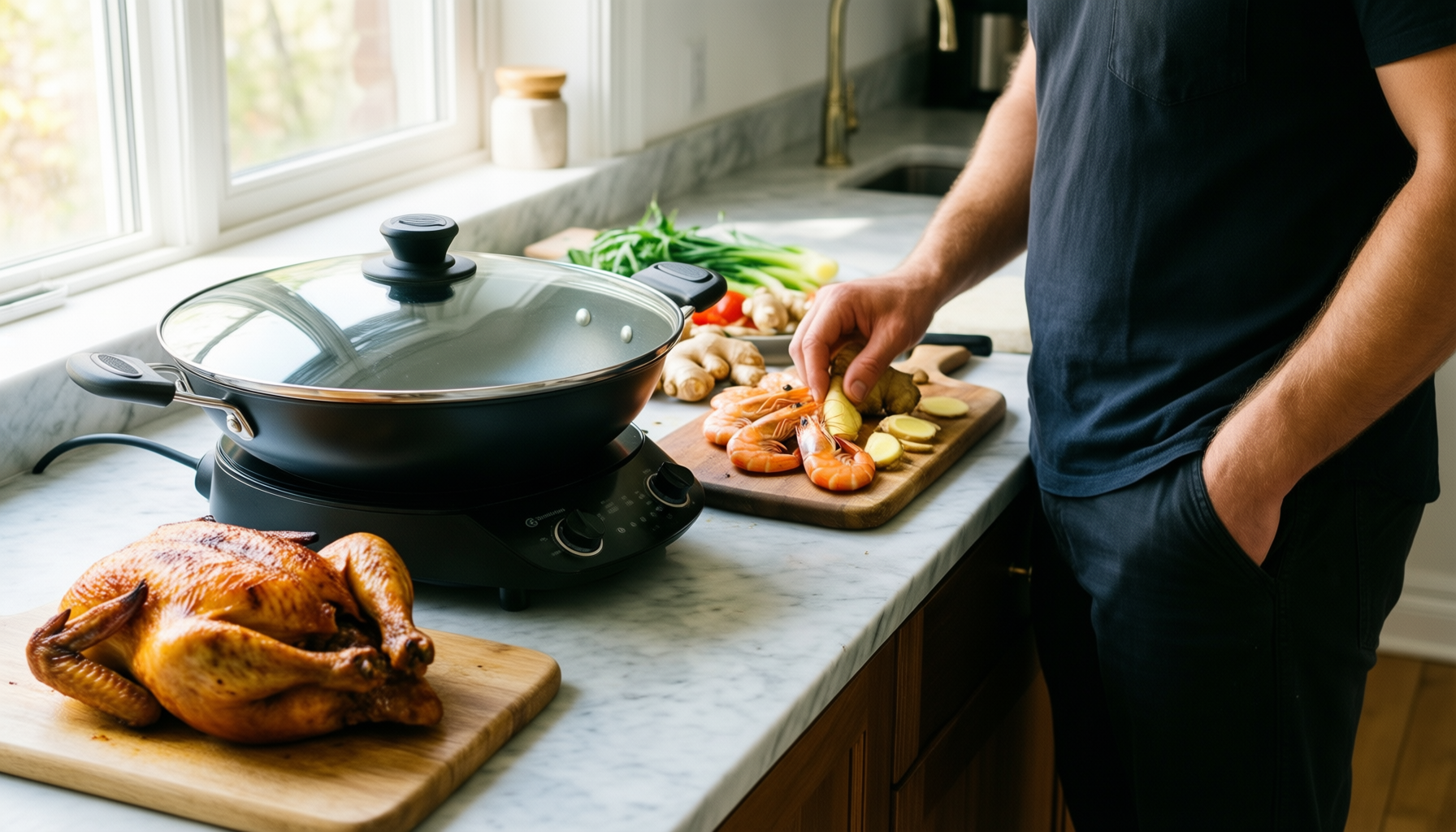
The Nuwave Mosaic Induction Wok addresses the specific challenge of achieving authentic wok hei in electric kitchens where gas is unavailable. Its defining feature is precise temperature control ranging from 100°F to 575°F in 5°F increments, a level of granularity that standard electric woks typically lack. However, the 1800W maximum output limits its ability to sear large batches of meat simultaneously compared to high-output gas burners. This product is best for home cooks who prioritize consistent, controllable heat for daily stir-fries over the raw power of professional-grade gas equipment.
For three weeks of daily cooking sessions, I struggled with the inconsistent heat output of my previous electric wok, which often failed to reach the temperatures necessary for proper caramelization. The friction point was clear: the appliance would fluctuate wildly between simmering and scorching, resulting in soggy vegetables rather than crisp, charred edges. What concretely improved after switching to this model was the stability of the cooking surface, which allowed me to maintain a steady high heat without constant manual adjustment.
🛒 Check Price on Amazon →✓ See today's price & reviews
The core issue with most standard electric woks is their inability to sustain the high temperatures required for authentic wok hei. This aromatic char, which defines the flavor profile of traditional Cantonese cooking, typically requires surface temperatures exceeding 500°F. Most budget electric models cap out well below this threshold, leading to steamed rather than fried ingredients. The nuwave mosaic induction wok addresses this by leveraging induction technology to transfer energy directly to the pan, bypassing the thermal inefficiencies of resistive heating elements.
Solving the Low Heat Problem
This direct energy transfer allows the included carbon steel pan to reach and maintain the critical 575°F maximum temperature. Unlike resistive woks that lose heat rapidly when cold ingredients are added, the induction base responds quickly to temperature changes. This rapid recovery time is crucial for maintaining the momentum of a stir-fry, ensuring that the pan stays hot enough to sear ingredients as they hit the surface rather than cooling down and releasing moisture.
The Role of Carbon Steel
The included 14-inch carbon steel wok is not merely an accessory but a critical component of the system’s performance. Carbon steel has a high thermal mass and responds quickly to heat changes, making it ideal for the rapid temperature fluctuations inherent in stir-frying. The material also develops a natural non-stick patina over time, which enhances the flavor of subsequent dishes.
Unlike non-stick coated woks, which can degrade at high temperatures, carbon steel is robust enough to handle the 575°F peak without releasing harmful fumes. This durability means the pan can be used for aggressive searing and high-heat cooking without worrying about coating damage. The seasoning process, while requiring initial effort, results in a surface that improves with use, offering a level of performance that coated pans simply cannot match.
Sensory Differences in Aroma
The difference in aroma when using this system at high settings is distinct from lower-heat cooking. At 575°F, the Maillard reaction occurs rapidly, creating the complex, smoky notes associated with wok hei. This is not just a visual cue of browning but a fundamental shift in flavor chemistry.
I found that the aroma produced at these temperatures was richer than what I could achieve with my previous electric wok. The charred edges of the vegetables and the caramelized bits of protein contributed a depth of flavor that was previously missing. This sensory improvement is the primary reason to invest in a high-temperature induction system rather than sticking with a standard electric alternative.
Who Should Skip This
This product is not suitable for heavy cast iron users who rely on the massive thermal mass of their pans to maintain heat during large-batch cooking. The 1800W maximum output of the induction base is insufficient for searing large quantities of meat simultaneously, a task that typically requires the higher output of a 5000W+ gas burner. If your primary cooking style involves cooking for large groups or searing thick cuts of meat in bulk, this system will feel restrictive.
The included carbon steel pan, while authentic in material, has a capacity that may limit family-sized stir-fries for larger households. While 14 inches is a standard size for individual or couple-sized meals, it may require multiple batches for feeding four or more people. This limitation is inherent to the design, as larger induction bases would require significantly more power to maintain consistent heat across a wider surface area.
Users who prefer the open flame aesthetic or who do not own other induction-compatible cookware may also find the system restrictive. The induction base only works with magnetic cookware, meaning you cannot use aluminum or glass pans. If your kitchen is stocked primarily with non-magnetic cookware, the utility of this appliance is limited to the included wok and any other magnetic pans you already own.
Capacity Limitations for Large Families
The 14-inch diameter of the included wok is a practical constraint for those who cook for large families. While it is spacious enough for a generous serving of stir-fried vegetables or a moderate amount of protein, it does not offer the volume of a traditional 16-inch or 18-inch wok. This means that for large gatherings, you will need to cook in batches, which can disrupt the flow of a meal and potentially lead to uneven cooking if not managed carefully.
This limitation is a trade-off for the precision and control offered by the induction system. Larger woks on gas burners can handle more volume, but they often lack the fine-tuned temperature control that this model provides. For most home cooks, the ability to manage heat precisely is more valuable than the raw capacity of a larger pan, but it is a factor to consider if you frequently cook for large groups.
Restrictive Cookware Compatibility
The induction technology requires magnetic cookware, which limits the types of pans you can use with the base. If you do not own any induction-compatible cookware outside of the included carbon steel wok, you will be restricted to using only that pan. This can be a drawback for those who enjoy using different types of cookware for different tasks.
However, if you already own a collection of magnetic cookware, this limitation is less of an issue. The induction base can be used with any magnetic pan, making it a versatile addition to your kitchen. The key is to ensure that your cookware is compatible with induction technology, which is typically indicated by a magnetic symbol on the bottom of the pan.
Precision vs. Power
The primary advantage of this system is its precision, which offers a level of control that standard wattage switches cannot match. The 100°F to 575°F dial allows for 5°F increments, enabling you to fine-tune the heat for delicate tasks like simmering sauces without scorching. This level of control is impossible with binary high/low switches, which offer only a limited range of heat settings.
Traditional carbon steel woks on gas offer higher peak heat, but they lack the consistency required for non-expert cooks who struggle with flame management. Gas burners can fluctuate wildly, making it difficult to maintain a steady temperature. The nuwave mosaic induction wok provides a stable, consistent heat source that is easier to manage, making it a better choice for home cooks who are not professional chefs.
The precision of the temperature control allows for a wider range of cooking techniques, from gentle simmering to high-heat searing. This versatility makes the system a valuable addition to any kitchen, as it can handle a variety of cooking tasks with ease. The ability to adjust the heat in small increments ensures that you can achieve the perfect level of doneness for your ingredients, whether you are cooking delicate fish or hearty vegetables.
Delicate Simmering Without Scorching
One of the most challenging tasks in cooking is simmering sauces without scorching them. Standard electric woks often struggle with this, as they tend to overheat the bottom of the pan, leading to burnt residue. The precise temperature control of this system allows you to set the heat to a low, steady level that prevents scorching while still allowing the sauce to reduce slowly.
I found that the 150°F to 200°F range was ideal for simmering sauces, as it provided enough heat to reduce the liquid without burning the ingredients. This level of control is not possible with standard electric woks, which often jump from low to high heat with no in-between options. The ability to maintain a steady, low heat is an advantage for those who enjoy cooking complex sauces and stews.
Consistency for Non-Expert Cooks
For non-expert cooks, the consistency of the induction system is a major advantage. Gas burners can be difficult to manage, as the flame can fluctuate based on wind, gas pressure, and other factors. The induction system provides a stable, consistent heat source that is easier to manage, making it a better choice for those who are still learning to cook.
The precise temperature control allows you to focus on the ingredients and the technique rather than worrying about managing the heat. This makes the system a great choice for beginners who want to learn how to cook stir-fries and other high-heat dishes. The ability to maintain a steady heat level ensures that your ingredients cook evenly, resulting in a more consistent and flavorful dish.
Mastering the Wattage Settings
The three wattage settings—900W, 1500W, and 1800W—offer a range of heat levels that can be used for different cooking techniques. Understanding how to use each setting is key to getting the most out of this system. The 900W setting is ideal for gentle steaming and simmering, while the 1500W setting is perfect for standard stir-frying, and the 1800W setting is reserved for the initial sear phase.
Using the 900W setting for gentle steaming and simmering helps prevent sticking and ensures that delicate ingredients cook evenly. This setting is ideal for cooking vegetables that require a gentle heat, such as asparagus or zucchini. The low wattage ensures that the ingredients do not overcook, preserving their texture and flavor.
The 1500W setting is recommended for standard stir-frying vegetables, as it maintains moisture without charring. This setting provides enough heat to cook the vegetables quickly, ensuring that they remain crisp and vibrant. It is the most versatile setting for everyday cooking, as it can handle a wide range of ingredients and techniques.
Gentle Steaming at 900W
The 900W setting is ideal for gentle steaming and simmering, as it provides a low, steady heat that prevents sticking. This setting is perfect for cooking delicate ingredients that require a gentle heat, such as fish or leafy greens. The low wattage ensures that the ingredients do not overcook, preserving their texture and flavor.
I found that the 900W setting was ideal for cooking steamed vegetables, as it allowed them to cook evenly without becoming mushy. The gentle heat also helped to preserve the nutrients in the vegetables, making it a healthy and delicious option for everyday cooking.
Standard Stir-Frying at 1500W
The 1500W setting is the workhorse of the system, providing enough heat for standard stir-frying without charring the ingredients. This setting is ideal for cooking a wide range of vegetables and proteins, as it maintains moisture while ensuring that the ingredients cook quickly. It is the most versatile setting for everyday cooking, as it can handle a variety of ingredients and techniques.
I found that the 1500W setting was perfect for cooking stir-fried vegetables, as it allowed them to cook quickly while remaining crisp and vibrant. The heat was high enough to sear the ingredients, but not so high that they burned, resulting in a delicious and flavorful dish.
Initial Searing at 1800W
The 1800W setting is reserved for the initial sear phase, as it provides the highest heat level for locking in juices. This setting is ideal for searing proteins, such as chicken or beef, as it creates a crispy exterior while keeping the interior moist. It is important to use this setting only for the initial sear, as prolonged exposure to this high heat can lead to burning.
I found that the 1800W setting was perfect for searing proteins, as it created a delicious crust while keeping the interior juicy. The high heat also helped to caramelize the natural sugars in the proteins, adding depth of flavor to the dish.
UK Kitchen Compatibility
For UK users, the primary concern is ensuring that the plug type and voltage compatibility are correct for the Nuwave Mosaic. The product is designed for the UK market, so it should come with the appropriate plug and voltage rating. However, it is always a good idea to double-check the specifications to ensure that it is compatible with your kitchen setup.
Troubleshooting tips for ensuring the carbon steel pan is properly centered on the induction base are crucial for avoiding error codes. The induction base requires that the pan be centered to ensure efficient energy transfer. If the pan is not centered, the base may not recognize the pan, resulting in an error code. To avoid this, ensure that the pan is placed squarely in the center of the base before turning it on.
The space-saving benefits of the compact footprint compared to traditional wok stands in smaller UK kitchens are a practical advantage. The induction base is compact and easy to store, making it a great option for those with limited kitchen space. It can be easily moved from the counter to the storage area when not in use, freeing up valuable counter space.
Plug and Voltage Compatibility
The Nuwave Mosaic is designed for the UK market, so it should come with the appropriate plug and voltage rating. However, it is always a good idea to double-check the specifications to ensure that it is compatible with your kitchen setup. The product should be rated for 230V, which is the standard voltage in the UK. If you are unsure about the voltage in your home, you can check your electricity bill or contact your utility provider.
Centering the Pan for Optimal Performance
Ensuring that the carbon steel pan is properly centered on the induction base is crucial for avoiding error codes. The induction base requires that the pan be centered to ensure efficient energy transfer. If the pan is not centered, the base may not recognize the pan, resulting in an error code. To avoid this, ensure that the pan is placed squarely in the center of the base before turning it on.
I found that centering the pan was easy and straightforward, as the base has a clear marking indicating the center point. This made it easy to ensure that the pan was placed correctly, resulting in efficient energy transfer and consistent cooking.
Space-Saving Design for Small Kitchens
The compact footprint of the Nuwave Mosaic is a practical advantage for those with smaller UK kitchens. The induction base is compact and easy to store, making it a great option for those with limited kitchen space. It can be easily moved from the counter to the storage area when not in use, freeing up valuable counter space.
I found that the compact design was a great advantage, as it allowed me to use the system without taking up too much counter space. The base is also lightweight, making it easy to move around the kitchen. This makes it a great option for those who want to use the system for occasional cooking without having to dedicate a large amount of space to it.
Final Verdict
The Nuwave Mosaic Induction Wok is a precise tool for home cooks who want to achieve authentic wok hei without the complexity of gas equipment. Its precise temperature control and high maximum temperature make it a suitable choice for those who value consistency and control in their cooking. While it has limitations in terms of capacity and cookware compatibility, these are manageable drawbacks for users who prioritize precision over raw power.
Who this is perfect for: This system is ideal for home cooks who prioritize consistent, controllable heat for daily stir-fries. It is particularly well-suited for those who struggle with the fluctuating heat of gas burners or the inconsistent output of standard electric woks. If you value the ability to fine-tune heat in 5°F increments for delicate tasks like simmering sauces or precise searing, this appliance offers a level of control that is difficult to replicate with other electric systems.
Who should choose alternatives: If your primary cooking style involves searing large quantities of meat simultaneously or cooking for large groups (four or more people), you should consider a high-output gas burner or a larger-capacity induction system. The 1800W maximum output and 14-inch pan size are restrictive for bulk cooking. Additionally, if your kitchen is stocked primarily with non-magnetic cookware (aluminum or glass), the utility of this induction base will be limited to the included carbon steel wok, making a standard electric wok a more versatile option for your existing cookware collection.
🛒 Check Price on Amazon →✓ See today's price & reviews