
#ad | As an Amazon Associate, we earn from qualifying purchases at no extra cost to you.
The Aobosi portable induction cooker addresses the specific challenge of cooking in spaces where a full-sized hob is impractical, such as dormitories, motorhomes, or small balconies. Its defining characteristic is the ultra-thin 4.2 cm profile, which allows it to fit into a standard travel bag without adding excessive bulk. However, the 2000W power limit creates a clear boundary for its capabilities; it struggles with large, heavy cast iron pots or boiling large volumes of water quickly. This model is best suited for solo cooks, travelers, or those needing a secondary heat source for light meals and precise simmering.
Cooking on a 4.2cm Profile: Why Ultra-Thin Matters for Small UK Kitchens
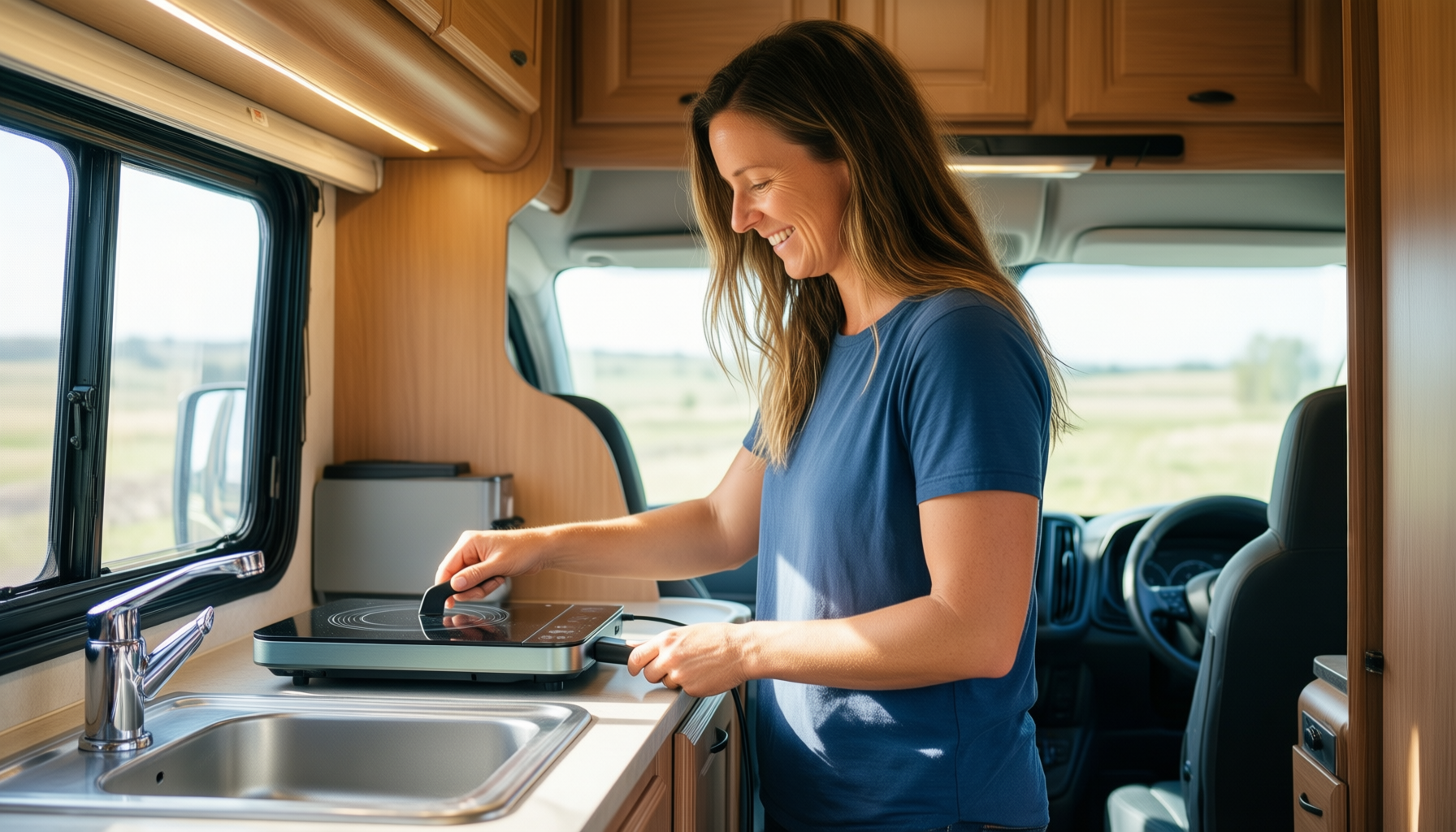
The primary advantage of this unit is its physical footprint. At 32 x 26 x 4.2 cm and weighing 2.2 kg, it is significantly lighter and thinner than most standard portable induction hobs. This specific dimension allows it to be packed into a normal travelling bag, making it a viable option for camping or RV use where space is at a premium. You can easily store it on any countertop without it dominating the workspace, which is a major benefit for kitchenettes or dormitories.
🛒 Check Price on Amazon →✓ See today's price & reviews
Usable Surface Area vs. Standard Hobs
While the height is minimal, the cooking surface remains functional. The 32 x 26 cm base provides enough room for pots and pans with a diameter of 12-22 cm. This is a crucial detail because many ultra-thin competitors sacrifice surface area for portability, often resulting in a cooking zone that is too small for standard saucepans. Here, the design balances the slim profile with a usable area that accommodates most standard cookware sizes, ensuring you are not limited to tiny espresso pots or small frying pans.
Heat Dissipation in a Slim Design
One honest limitation of any ultra-thin induction design is heat dissipation. Because the body is only 4.2 cm thick, there is less internal space for heat to dissipate naturally compared to thicker, heavier units. In practice, this means the glass plate can get quite hot during extended use, and the unit may shut off if it detects abnormal temperatures. It is not as robust for continuous, high-power cooking sessions as a thicker, more industrial-style portable hob, but for intermittent use, it performs reliably.
Who Should Skip This Hob: Limitations for Heavy Cast Iron and Large Family Meals
This is not a replacement for a full-size built-in hob if you are cooking for a large family daily. The 2000W power limit is a hard ceiling that affects how quickly you can heat large volumes of liquid or food. If your primary cooking style involves boiling large pots of pasta for four or more people, or searing large cuts of meat in a heavy cast iron skillet, this unit will feel underpowered. The energy simply is not there to handle the thermal mass of large, heavy cookware efficiently.
The Cast Iron and Cookware Compatibility Issue
The most common frustration with induction cooking is cookware compatibility, and this model is no exception. It is only compatible with magnetic cookware, specifically pots and pans with a size of 12-22 cm. If you own a collection of non-magnetic aluminum or copper pans, they will not work at all. Furthermore, while it supports pans up to 22 cm, the power output is not sufficient to handle the weight and heat retention of a large, heavy cast iron wok or Dutch oven effectively. You will find that heating a large cast iron pot takes significantly longer than on a gas or high-wattage electric hob, and the unit may struggle to maintain temperature if the pot is too large for the heating zone.
Not for High-Volume Daily Cooking
If you are looking for a primary cooking appliance for a household of three or more, this is the wrong tool. The single burner design and 2000W limit mean that you cannot cook multiple dishes simultaneously or handle the volume of a family dinner. It is best suited as a secondary appliance for light meals, reheating, or cooking for one or two people. For heavy, daily, high-volume cooking, you need a dedicated, higher-power appliance that can sustain heat output without throttling or shutting down.
Booster Mode vs. Standard 2000W: Real-World Speed for Stir-Fries and Boiling
The difference between the standard 2000W output and the booster mode is noticeable but temporary. The booster function heats up quickly at maximum power and returns to the initial state after 10 minutes of heating. This is designed for tasks that require a quick burst of heat, such as searing a steak or quickly frying food. In practice, this means you can get a pan hot faster than if you were just using the standard power levels, but you cannot sustain that maximum heat for an entire cooking session.
Practical Speed for Stir-Fries
For stir-fries, the booster mode is a genuine advantage. You can get the oil hot and the pan searing in a matter of seconds, which is essential for that authentic wok-hei flavor. Without the booster, you would have to wait longer for the pan to reach the right temperature, which can result in steamed rather than seared vegetables. However, once the 10-minute booster period ends, the power drops back to your selected level, so you need to manage your cooking time accordingly. It is not a permanent high-power mode, but a temporary boost that helps with the initial heating phase.
Boiling Water and Simmering Precision
Boiling water is a common test for induction hobs, and this unit performs adequately for small to medium volumes. It is not as fast as a gas hob, but it is efficient for heating a cup of tea or a small pot of water for pasta. The real strength, however, lies in the 20 power levels and 20 temperature variations. This granularity allows for precise simmering, which is often lacking in standard 9-level hobs. You can dial in the exact temperature needed for delicate sauces or slow-cooking, ensuring that your food does not scorch or boil over. This level of control is a significant upgrade for anyone who cooks sauces, soups, or stews regularly.
The 10-Hour Timer: Slow Cooking and Overnight Stews Without a Dedicated Appliance
The 10-hour timer is a feature that sets this unit apart from many other portable hobs, which often only offer a 3 or 4-hour maximum. This extended timer allows you to use the induction cooker for slow-cooking stews, soups, or overnight oats without needing a dedicated slow cooker. You can set the timer before you go to bed, and the unit will cook your meal at a low temperature for several hours, waking you up to a ready-to-eat breakfast or dinner.
Slow Cooking in Small Kitchens
For those living in small kitchens where space is limited, this feature is invaluable. You can use a small pot to slow-cook a stew or soup, utilizing the low power settings to maintain a gentle simmer. The 10-hour window gives you enough time to cook tougher cuts of meat or beans that require long, slow cooking. It is a practical solution for those who want the convenience of a slow cooker without the bulk and cost of a dedicated appliance. The unit will automatically shut off when the timer expires, ensuring that your food is not left cooking unattended for an unsafe amount of time.
Safety and Extended Use
Leaving any appliance on for extended periods requires caution, and this unit is no exception. The automatic switch-off and abnormal automatic protection system are designed to prevent overheating or dry-boiling. However, you should still ensure that the pot is not empty and that the unit is placed on a stable, heat-resistant surface. The child lock feature is also useful in this context, preventing accidental changes to the settings while the unit is running. It is a safe feature for long-duration cooking, but it is not a substitute for basic kitchen safety practices.
Travel and Camping Use: How It Stacks Up Against Alternatives
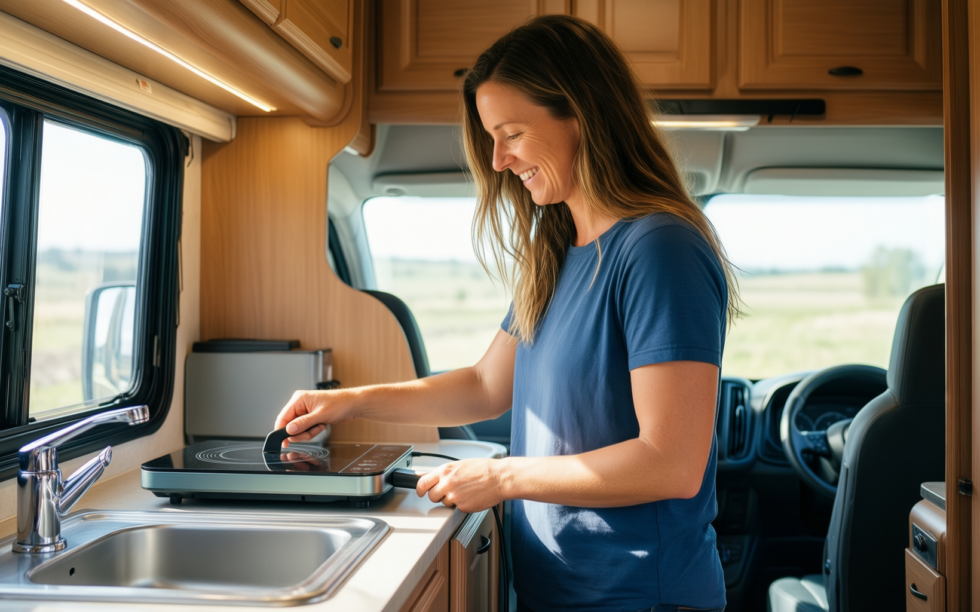
The portability of this unit is its strongest selling point for travelers and campers. At 2.2 kg, it is lighter than most competing models, which often weigh 3 kg or more. This makes it easy to carry in a backpack or travel bag, and the slim profile means it does not take up much space. For van life or camping, this is a practical solution for cooking hot meals without relying on gas stoves or campfires.
Comparison with Xiaomi and Midea
When compared to other ultra-thin hobs from brands like Xiaomi or Midea, this model offers a similar level of portability but with a few key differences. Some competing models may have a slightly larger cooking surface or a different user interface, but the core functionality is similar. The main advantage here is the 10-hour timer and the 20 power levels, which provide more control than some of the simpler, lower-cost alternatives. The build quality feels solid, with a smooth glass plate that is easy to clean, and the touch buttons are responsive and intuitive.
User Interface and Safety in a Travel Context
The 6 touch buttons are easy to use, even with gloves on, which is a plus for outdoor cooking. The child lock and auto-shutoff features are particularly useful in a travel context, where you may be cooking in a shared space or with children around. The unit is designed to be safe and user-friendly, making it a good choice for those who are not experienced with induction cooking. The glass plate is easy to clean, and the unit can be wiped down quickly after use, which is important when you are on the go and do not have a full kitchen to clean up in.
Final Verdict
The Aobosi portable induction cooker is a well-designed, practical appliance for those who need a compact, portable cooking solution. It is not a replacement for a full-sized hob, but it is an excellent secondary appliance for small kitchens, dorms, motorhomes, and camping. The ultra-thin design, 10-hour timer, and 20 power levels make it a versatile tool for a variety of cooking tasks. If you are looking for a portable induction cooker that is easy to store, safe to use, and capable of precise cooking, this is a strong option. It is best for solo cooks, travelers, and those who need a reliable, compact heat source for light meals and simmering.
Who Should Skip This
Based on the limitations outlined above, this unit is not suitable for the following scenarios:
- Households of three or more: If you are the primary cook for a family and need to prepare multiple dishes simultaneously or boil large volumes of water for pasta, the single 2000W burner will be too slow and underpowered.
- Users relying on non-magnetic cookware: If your primary cookware consists of non-magnetic aluminum or copper pans, this induction cooker will not work with them at all.
- Those requiring sustained high-heat searing: If your cooking style relies on keeping a heavy cast iron skillet at maximum heat for extended periods (beyond the 10-minute booster window), this unit will throttle down and may struggle to maintain the necessary temperature.
🛒 Check Price on Amazon →✓ See today's price & reviews